Mac Os X Server 10.9 Download
Tech —
A ability user'due south guide to OS X Server, Mavericks edition
OS X Server 10.9 adds some new services and makes others easier to apply.
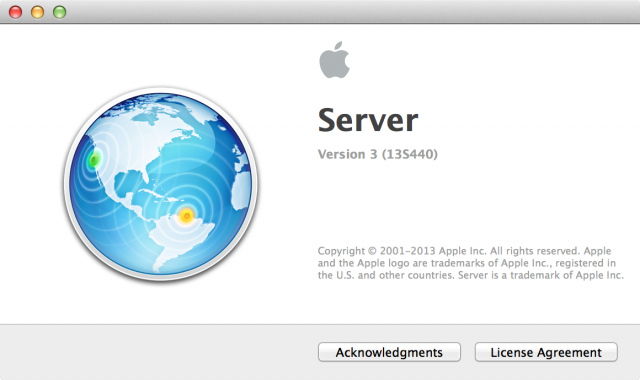
Mavericks runs version three.0 of Server.app, the convenient face of Os X Server.
Andrew Cunningham
The Mount Lion version of OS X Server marked the finish of a transition for Apple's server software. When Apple released OS X 10.half dozen in 2009, Server was an expensive and entirely separate version of Bone 10 that only shipped on Apple'due south rack-mountable XServe systems and cost $one,000 if you lot wanted to run it on any of your other Macs. Fast-forrad to 2012 and the XServe was long-dead, OS Ten Server was a $20 add-on to Os X, and the powerful-merely-complex tools used to manage and configure the server software had been thrown out in favor of a greatly simplified application primarily controlled via big on/off switches. It took a couple of years, but Apple had done the same affair to its server hardware and software that information technology did to Last Cut Pro. The company made its features more accessible for small businesses and loftier-finish consumers at the expense of features important to a subset of professional person users.
The Mavericks version of OS X Server ushers in no such sweeping changes. In fact, the scope of the update is closer to the incremental updates that the Mountain Lion version has received betwixt its launch in July of 2012 and now. Despite a version number increase from two.10 to iii.X, Os X Server is finished with the major overhauls. The software has been changed from an enterprise-targeted package to one better suited to power users and small businesses. At present that the transition is complete, it'due south clear that slow, steady comeback is the new normal.
This ways at that place's a little less truly new ground to cover than there was terminal year, but in keeping with last yr's review, we're all the same going to go through all of the services OS 10 Server offers item past item. This will serve equally both an evaluation of those services as well equally a basic how-to guide for those who are new to the software—in cases where nothing has changed, we have re-used portions of final year's review. If you'd like to read more most OS X Server's transition from an enterprise product to a "prosumer" product, that'south background information that we covered terminal year.
Installation, setup, and getting started
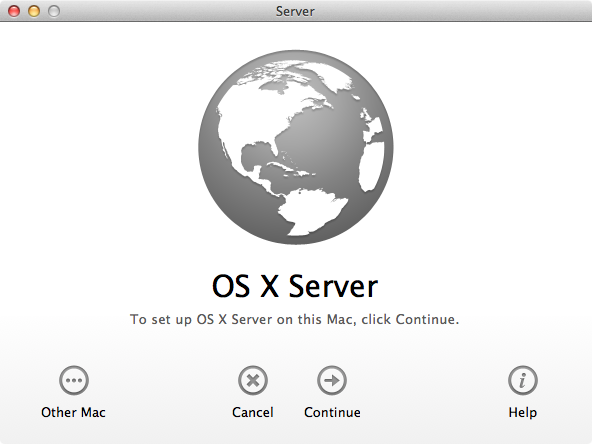
Andrew Cunningham
When configuring a new OS X Server, the install procedure is the aforementioned as it was in Mountain Lion: take any Mac running Bone X x.9 and download and install the Server software package (future Server.app) from the Mac App Shop. Unlike Mavericks itself, Server.app 3.0 is yet a $19.99 download both for new customers and for people upgrading from Mountain Lion or Lion Server, though download codes are beingness offered gratis of (additional) accuse to members of Apple'due south $99-a-year Bone X and iOS developer programs. The older Server.app versions won't run in Mavericks, and Server.app three.0 won't run in Panthera leo or Mount Lion, so the upgrade process is an all-or-zip proposition.
Apple tree has removed most of the more intimidating configuration screens from the Server installation process. Where Mountain Lion Server and older versions would inquire for hostname and IP address configuration (amidst other things), the new Server.app gets right to the point. Concord to the EULA, input an administrator's username and countersign, and wait for the first-fourth dimension setup process to consummate. Configuring those more than advanced settings can still be done after the fact in Server.app, but for abode users, the more intimidating barriers to installation have been removed.
Another consumer-y touch is the addition of new Server Tutorials, which pop upwards in front of the Server.app window first thing after the showtime-time setup has completed. The quondam Server.app had a persistent "Next Steps" area beyond the bottom of the screen that would assist newbies through some of the server basics, merely the Server Tutorials are more than friendly and more than comprehensive all around.
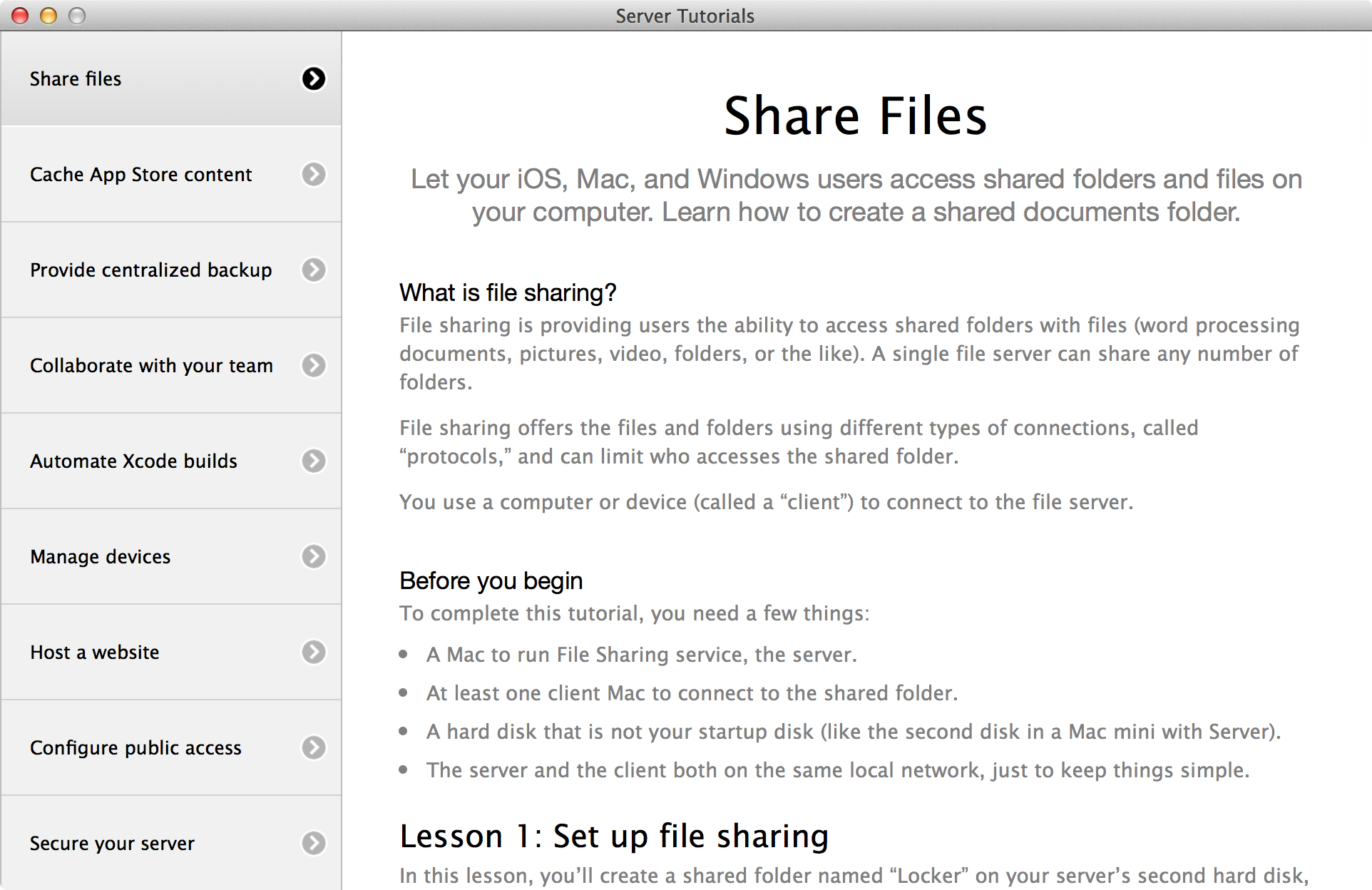
Overstate / The new Tutorials aren't a new feature per se, but they make existing features easier for newbies to learn.
Andrew Cunningham
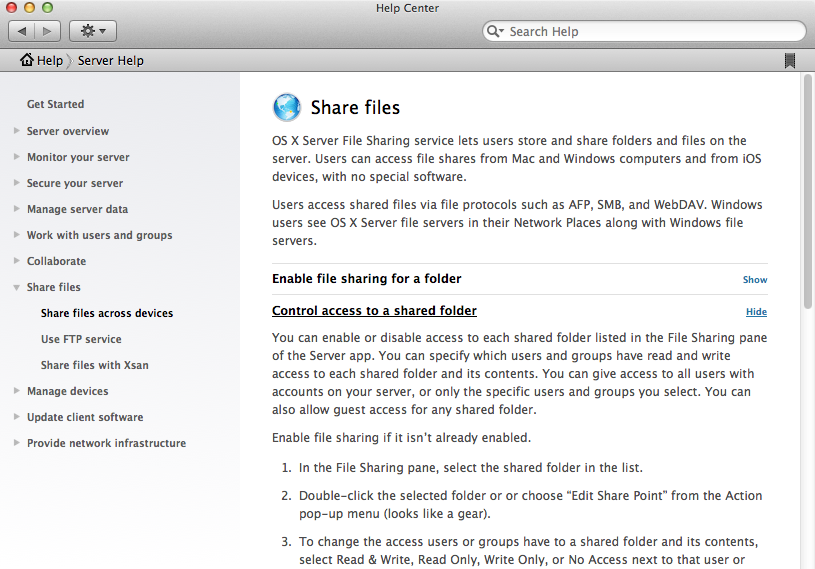
Overstate / The older, more exhaustive Assist files are still available, equally is Apple'due south extensive online documentation.
Andrew Cunningham
Each tutorial starts with an objective stated in plain language: "share files" or "provide centralized backup" or "host a website." Clicking on each section opens upward a tutorial that explains services like File Sharing and Time Auto at a high level before providing footstep-by-step instructions with screenshots and some resources for farther reading—the "Advanced Topics" department of Apple's online Os X Server aid is more often than not the first stop.
Apple's online help and the sometime-way Server Help files are all nevertheless there in the Mavericks version of OS X Server, but the new Server Tutorials fill a pretty obvious user didactics gap from older versions of the software. Forth with the simplification of the setup procedure, they make it easier for a Mac enthusiast to make the jump from existence a regular sometime Os X user to an amateur server ambassador. Learning OS 10 Server earlier was a study in excavation into Help files, Googling, and merely poking around at stuff until it seemed like it was working, but the tutorials provide neophytes a clearer path from Point A to Betoken B.
Meet Server.app
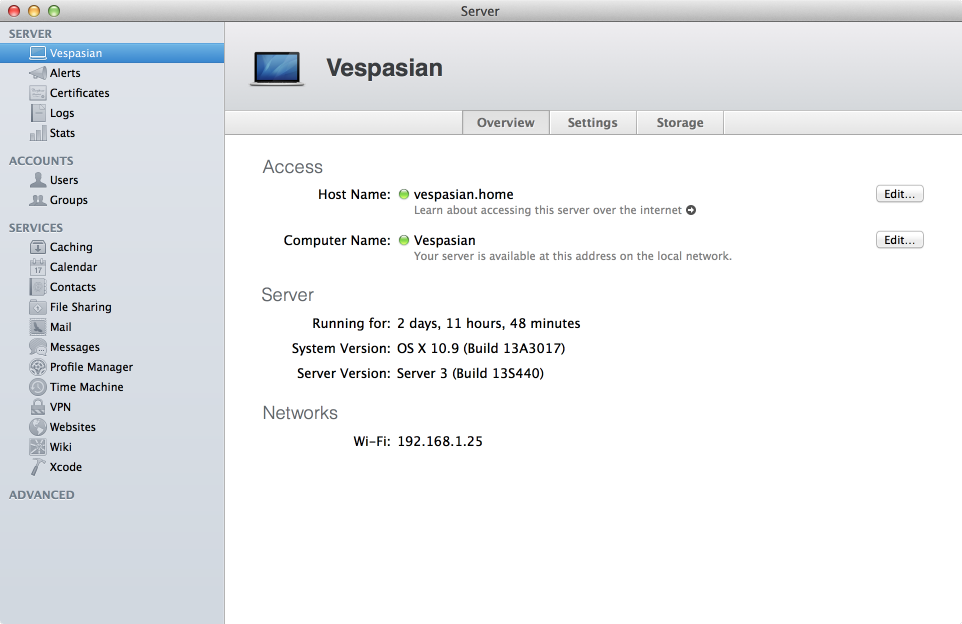
Overstate / Server.app has been spruced upwards, but it should all the same be familiar if you used it in Mountain Lion.
Andrew Cunningham
If yous want to do basically anything with OS X Server, you lot're going to do information technology with Server.app. This all-in-i server administration tool has completely replaced the more avant-garde merely less convenient Server Admin Tools from Lion and older versions of Os X, only it supports most of the aforementioned features. The look of the awarding has changed a footling from its Mount Lion incarnation—linen has been excised, the default window size is wider, and the way items are organized and presented has been rethought, mostly for the better—simply information technology's nevertheless largely the aforementioned interface.
Server.app is used to:
- Manage local and Open up Directory users and groups
- Enable, disable, and configure services, all of which nosotros'll be discussing individually
- Add SSL certificates
- Set remote management preferences
- Enable push notifications
- Check your server'southward condition and log letters
You can launch the app direct from the server itself, or you can install it on any Bone X client figurer and connect to your Mavericks servers using their host names or IP addresses—but click Connect to Server from the Manage menu. Server.app in Mavericks is able to manage both Mavericks servers and older Mountain Lion servers, so if you lot manage multiple servers and don't want to upgrade all of them at once, you'll be able to use the same tool to control them both. Server.app in Mount Lion couldn't connect to Lion servers, and then this is a welcome change.
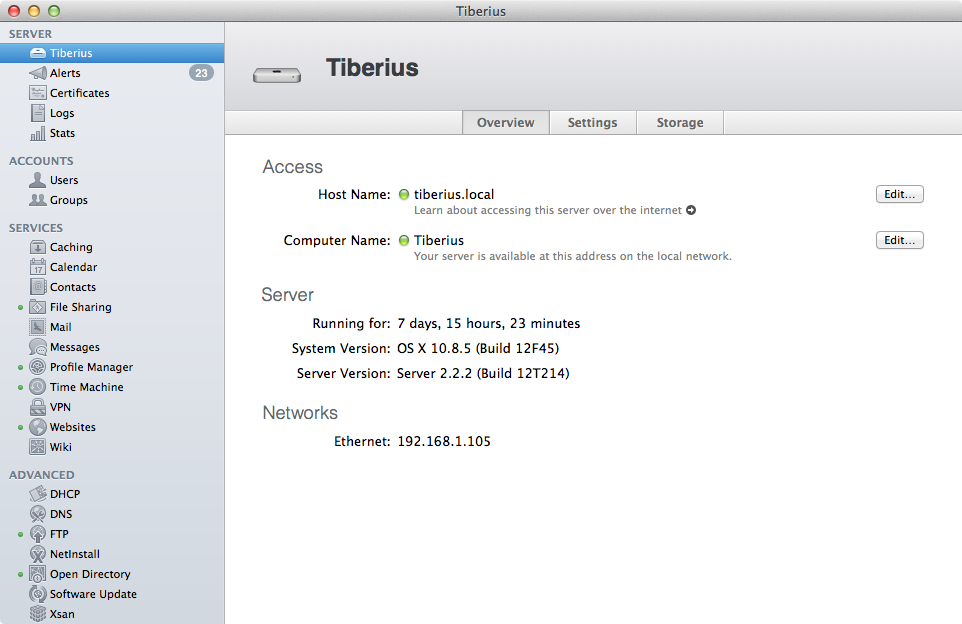
Enlarge / Managing a Mount Lion server from the Mavericks version of Server.app.
Andrew Cunningham
Looking at the left of the screen, start at the meridian and work your way downwards. Items in the "Server" section are all about server monitoring and general administration. This is where you tin view uptime and log data, usage statistics, log files from your various services, and whatever alerts that the server may have generated. Fifty-fifty in the Alerts section, Mavericks dumbs things down a bit in the name of user friendliness. Things similar "South.M.A.R.T. status" and "Disk unreachable" take been consolidated under "Deejay," while most of the headings have been simplified.
Other Server.app uses include viewing and changing IP address and hostname information, managing your security certificates, and configuring the server's remote administration options. Your server tin can be managed remotely using SSH, screen sharing, or other client Macs running Server.app.
Finally, the Server department of Server.app is where you configure push notifications for your services. Push notifications are used with the Postal service, Contacts, Agenda, and Profile Manager services to alert your users when new letters or calendar invites or other data comes in. Apple's back up documentation recommends using button notifications with these services as a more efficient alternative to polling the server for information at a fix interval. Push button notifications are also used to alert server administrators when new Alerts are generated—any Mac that has connected to your server using Server.app will receive these Alerts in its Notification Eye.
-
A few of the things that Server.app does: managing remote access settings.
-
Monitoring alerts.
-
Managing certificates.
-
Viewing logs for the server and the private services.
-
Resource usage stats.
-
And, finally, managing remote servers.
Push notifications can exist sent from your server to whatsoever OS X or iOS customer that it manages. You kickoff need to become a Push Notification Service certificate from Apple using an organizational Apple ID as opposed to the personal Apple ID that y'all might apply in the Mac App Shop or with an Apple Programmer account. The document, which is used to encrypt the advice betwixt your server and your clients, is gratuitous, but it must be renewed yearly.
About of your fourth dimension in Server.app will be spent in the "Accounts" and "Services" sections. We'll talk more about Accounts later on in the Open up Directory section, since it'southward by and large useful for administrators of pocket-sized to medium-size businesses using their Macs to manage user credentials and permissions. The panes for Server'southward diverse services are where you'll spend the vast majority of your time in OS X Server, and we'll be going through each service 1 by one to explain their particular uses and features.
The but universal alter to all Service panes is the addition of a new Access section that gives you more granular status messages nigh what the service is doing at a detail point in time, forth with a link to an OS 10 Server aid file with more data for each service. Most of the time this message will just tell you whether the service is on or off, only again, the proper noun of the game is user-friendliness. This data volition mostly be redundant or unnecessary for the power user, but Apple is working to make Server easier to learn for people new to the software.
Finally, there's at present a split section in Server.app for "Advanced" services, including DHCP, DNS, FTP, NetInstall, Open up Directory, Software Update, and Xsan. These services are all hidden by default in the View menu (again, one assumes, to go along newbies from stumbling onto them), but clicking whatever of them volition cause all of them to show up in Server.app every bit they normally would in Mountain Lion. Nosotros'll be going through all of them to talk almost what they do, but different some of the not-advanced services, there are very few changes betwixt the Mavericks and Mountain Panthera leo versions.
Mac Os X Server 10.9 Download
Posted by: pearsonmanto1985.blogspot.com